We begin our small trek from our domicile on the border of Ouakam. My new housemate Ahmadu leads the way through the area he has grown up in. The home of his childhood lies just across the street and the road is filled with his longtime friends and acquaintances.
Gary and I follow closely behind as we make our way through the dirt roads. People surround us on all sides chatting away in Wolof. I recognize a word there, a phrase here, but it’s mostly gibberish to me. Somehow, I still understand what they are saying. Maybe it is the tone in which they speak, the gestures they use, or some inexplicable human connection–whatever it is, it makes me feel like less of an outsider and more like I belong.
Our journey will be dim as we can only count on the sparse moonlight that escapes the cloudy night sky. Oddly enough, the dark brings me no fear. If I were somewhere in the States perhaps it would. Neighborhoods of northwest D.C. may instill a slight fear or even neighborhoods of my hometown of Lansing, Michigan become eerie in the darkness of night but not here. Ahmadu strides along with confidence so I follow suit.
Looking up I notice a structure that reminds me of the new condos on gentrifying U. Street in the district. It is funny how a world a part some things can be so familiar. Our path goes through a field where there is a big market on the weekend, Ahmadu tells us. The village of Ouakam is just across the field on the left and straight ahead is the distant glow of the lighthouse on the shore.
Small talk between English and French (I’m learning) accompanies our walk through the field as we approach the road. The occasional headlights of taxis and buses bring extra light to the hike. Looking ahead there is a dwarfing monument on the hill above. Masake (the daughter of Madame Kane and fellow HU grad) told us before about how the people of Senegal don’t like the monument because it’s expensive, depicts a woman with European features, shows the family of three dressed scantly clad almost as if they were savages, and the designer was foreigner. Ahmadu further went on to tell us that the statue cost the people of Senegal $13 billion! I would be upset too!
Now we have reached the Carnish, (forgive me, I may have spelled that incorrectly) which is the road that runs by the sea. As we travel along the shoulder cars whip by. Exhaust fumes from many of them remind me that the United States doesn’t have a monopoly on pollution. A cool breeze wisps by cutting through the exhaust, almost as if to tell me that nature will prevail.
At last we have arrived! Standing in the sand I gaze across the vast sea with a million thoughts whizzing through my mind. One realization takes precedence. Here I stand peering from the very same angle at the very same water that my ancestors gazed upon centuries ago. However as I look out I do so as a free man who has come back to this land of his own volition and the liberty to return or stay according to my prerogative. My ancestors, on they other hand, stared out into what must have appeared to be a watery abyss with no possible idea of what tremendous tribulation lie before them.
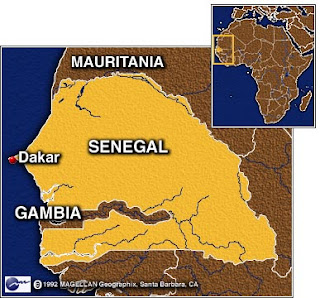
So much has happened in only five days here in Dakar, Senegal. I eagerly await the experiences of tomorrow!



 Posts
Posts


